
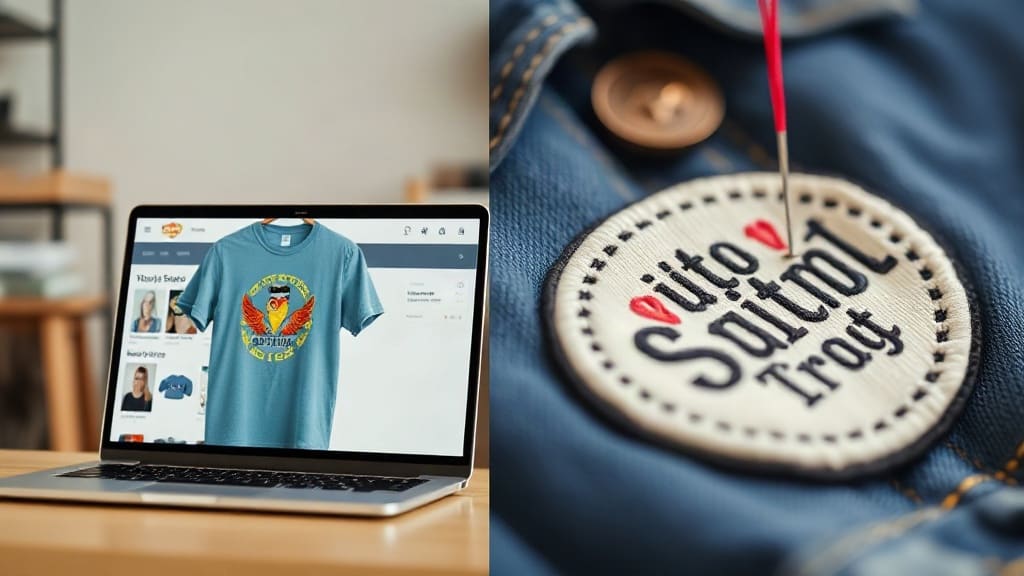
In the world of custom merchandise, two methods stand out for their versatility and popularity: print on demand and custom patches. Whether you're a small business owner looking to create branded apparel or an artist wanting to sell unique designs, understanding the strengths and limitations of each approach is crucial. This article breaks down both methods, compares them across key factors, and helps you decide which one aligns best with your goals. By the end, you'll have a clear roadmap to elevate your brand's presence.
What Is Print on Demand?
Print on demand (POD) is a production model where items are printed only after an order is placed. This eliminates the need for inventory and allows for a wide range of products, from t-shirts to mugs. Popular platforms like Printful and Printify connect with e-commerce stores, automating the process. The appeal lies in low upfront costs and the ability to offer countless designs without holding stock.
How Print on Demand Works
You create a design, upload it to a POD service, and integrate with your online store. When a customer buys, the POD provider prints and ships the item directly. You pay a base cost and set your retail price. This model is ideal for testing designs and scaling without risk.
Pros and Cons of Print on Demand
- Pros: No inventory, low startup costs, easy to add new products, eco-friendly (less waste).
- Cons: Lower profit margins, limited control over quality, shipping times can be longer, designs may fade over time.
While print on demand is convenient, it may not be the best for building a premium brand image. The print quality varies, and the lack of tactile elements can make products feel less special.
What Are Custom Patches?
Custom patches are embroidered or woven emblems that can be attached to garments, bags, or hats. They add a three-dimensional, high-quality feel that printed designs often lack. Patches are made by stitching threads onto a fabric base, creating durable and vibrant logos. They are commonly used by military units, scout groups, and brands seeking a premium look.
How Custom Patches Are Made
The process starts with digitizing your design, followed by stitching it onto twill or felt. You can choose from various backing options, such as iron-on, sew-on, or Velcro. The result is a tactile, long-lasting emblem that withstands wear and tear.
Pros and Cons of Custom Patches
- Pros: High perceived value, durable, customizable in shape and thread colors, adds texture and depth.
- Cons: Higher unit cost, minimum order quantities may apply, production time can be longer, design complexity may be limited by thread details.
For brands that want to stand out with a tangible, premium feel, custom patches are a strong choice. They turn ordinary apparel into something special.
Comparing Print on Demand and Custom Patches
When deciding between print on demand and custom patches, consider these factors:
Cost and Minimum Order Quantity
Print on demand wins for low upfront investment. You pay only when an order comes in, with no minimums. Custom patches often require a minimum order (e.g., 50 pieces), and the unit cost is higher. However, the per-unit cost decreases with larger orders, making patches cost-effective for bulk branding.
Quality and Durability
Patches are embroidered with threads, making them resistant to fading and peeling. They can last for years, even with frequent washing. Print on demand uses DTG or sublimation printing, which can crack or fade over time. For longevity, patches are superior.
Design Flexibility
Print on demand excels with complex, photorealistic designs because it can print unlimited colors. Custom patches are limited to thread colors and may simplify intricate details. However, patches offer unique shapes and 3D effects that printing cannot replicate.
Turnaround Time
POD items are printed and shipped within days. Patches require production time, often 1-2 weeks, plus shipping. If you need fast fulfillment, POD is faster.
Brand Perception
Patches convey craftsmanship and attention to detail, enhancing brand prestige. POD is seen as convenient but less premium. For luxury or niche brands, patches are more aligned.
When to Choose Print on Demand?
Choose print on demand if:
- You're testing multiple designs without risk.
- You have a tight budget and want to avoid inventory.
- Your designs are complex or colorful.
- You need fast fulfillment for a global audience.
It's perfect for artists, drop shippers, and startups experimenting with merchandise.
When to Choose Custom Patches?
Choose custom patches if:
- You want a premium, tactile branding element.
- Your logo is simple and can be embroidered.
- You're ordering in bulk for uniforms, teams, or events.
- You value durability and longevity.
Ideal for businesses, clubs, and organizations that want to leave a lasting impression.
Can You Combine Both?
Absolutely! Many brands use print on demand for quick merchandise like t-shirts and mugs, while adding custom patches to premium items like jackets and hats. This hybrid approach balances cost and quality. For example, a startup might sell POD t-shirts with a printed logo, but also offer a limited-edition cap with an embroidered patch. This creates a tiered product line that appeals to different customer segments.
Real-World Examples
Consider a small coffee shop. They could use print on demand to sell mugs and tote bags with their logo, keeping costs low. Simultaneously, they could order custom patches to sew onto aprons and hats for staff, enhancing the brand's artisanal vibe. Another example: a gaming community might sell POD hoodies with complex artwork, but also offer patch sets for members to customize their own gear. Both methods serve distinct purposes.
Environmental Impact
Print on demand is often touted as eco-friendly because it reduces overproduction. However, the inks and materials used may not be sustainable. Custom patches are durable and long-lasting, but the embroidery process can be resource-intensive. Some patch manufacturers use recycled threads and eco-friendly backings. Neither is perfectly green, but patches' longevity means fewer replacements.
How to Get Started with Custom Patches
If you decide to go with custom patches, follow these steps:
- Choose a reputable patch maker (like EmbroideredGo).
- Prepare your design in vector format.
- Select size, shape, and thread colors.
- Approve a digital proof or physical sample.
- Place your order and wait for production.
For print on demand, sign up with a POD platform, upload designs, and connect to your store. Both paths are accessible, but patches require more planning.
Frequently Asked Questions
Which is cheaper: print on demand or custom patches?
For small quantities, print on demand is cheaper because there's no minimum order. Custom patches have a higher upfront cost due to minimums, but the per-unit price drops for bulk orders. If you need just a few items, POD wins; for large orders, patches can be more economical.
Can custom patches be used on any fabric?
Yes, custom patches can be attached to most fabrics, including cotton, denim, and polyester. The method of attachment (iron-on, sew-on, Velcro) determines suitability. For delicate fabrics, sew-on is best; for heavy use, Velcro allows easy swapping.
How long do print on demand products last?
The longevity of print on demand items depends on the printing method and care. DTG prints may fade after 20-30 washes, while sublimation lasts longer. Following care instructions (washing inside out, cold water) can extend the life.
What's the minimum order for custom patches?
Minimums vary by manufacturer. Some require as few as 10 patches, while others set 50 or 100. At EmbroideredGo, we offer flexible minimums to accommodate small businesses and large organizations alike.
Can I mix print on demand and custom patches in one product?
Yes, you can. For example, a jacket could have a printed design on the back and a custom patch on the front. This combines the strengths of both methods. However, ensure the patch is attached securely to avoid damage during washing.
Final Thoughts
Both print on demand and custom patches have their place in a branding strategy. POD offers flexibility and low risk, while patches deliver a premium, durable touch. Assess your budget, design complexity, and target audience to make the right choice. And remember, you don't have to pick just one. A hybrid approach can give you the best of both worlds. For high-quality custom patches, visit EmbroideredGo to explore your options and elevate your brand today.