
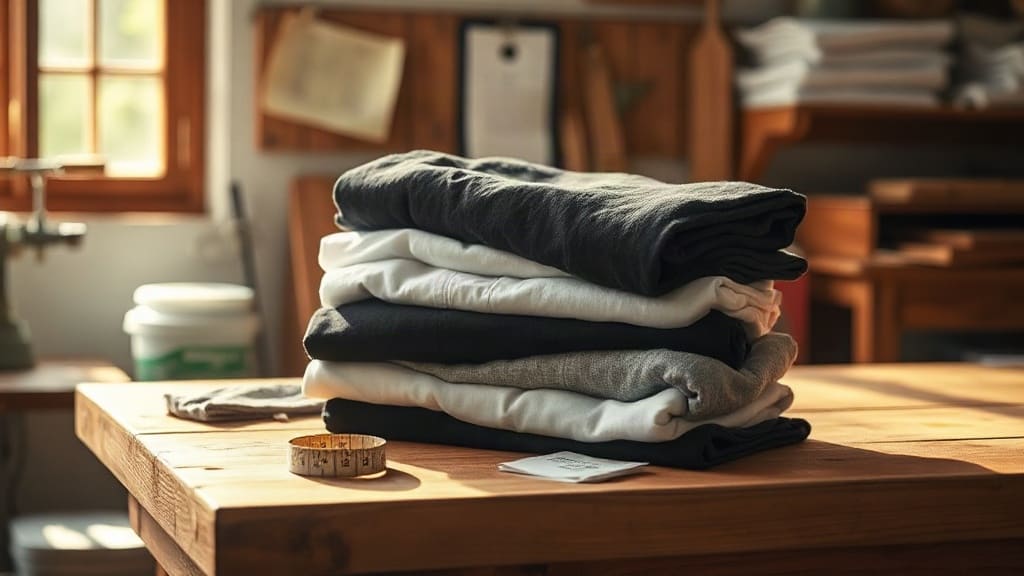
I still remember the first time I pulled a Shaka Wear tee out of the dryer. I had accidentally left it on high heat for over an hour, fully expecting the collar to ripple and the body to shrink into a crop top. Instead, it came out almost exactly the same size, maybe a hair softer, with the double-stitched hem still flat. That was eighteen months ago. Since then I've bought more than a dozen of their shirts, worn them to job sites, printed on them, and washed them every possible wrong way just to see what would happen. This isn't a spec sheet. It's what I learned from actually living in these tees.
Why heavyweight cotton behaves differently
Most t-shirts you grab from a big-box store weigh somewhere between 4.5 and 5.5 ounces per square yard. Shaka Wear tees typically start around 6.5 ounces and go up from there. That weight changes everything. The fabric has more mass, so it hangs straighter, resists twisting in the wash, and takes much longer to develop holes. When I compare a six-month-old Shaka to a six-month-old fast-fashion tee, the difference isn't subtle. The cheap one has a wavy hem and a neckline that looks like a loose rubber band. The Shaka still looks like something I could wear to a meeting if I had to.
That density also means the shirt doesn't go transparent when you hold it up to a light. If you've ever bought a light-colored tee that showed every contour of your chest, you know why this matters. The extra yarn blocks light without making you feel like you're wearing a canvas tarp.
What the fabric actually feels like
Out of the bag, it's crisp. Not stiff like cardboard, but structured. The first wear feels a little more formal than a worn-in cotton tee. After two or three washes, it relaxes into something genuinely comfortable. I've had friends try one on and immediately ask where to buy it, which is usually a good sign.
How much does it shrink?
In my experience, expect about half an inch of shrinkage in the body length and a quarter inch in the chest after the first hot wash. After that, it stabilizes. I've washed the same shirt twenty times on warm and it hasn't budged since that first cycle. If you're between sizes and want a fitted look, buy your true size. If you want room to move, size up. The shirts don't shrink enough to change your size category, but they do snug up just a touch.
Fit and sizing across different Shaka Wear styles
Not every Shaka Wear shirt fits the same. I learned this the hard way when I ordered a three-pack of their basic crew necks and a two-pack of their heavier streetwear cuts in the same size. The streetwear version ran about an inch wider in the chest and a full inch longer in the body. If you're ordering online, check the product description for the weight and cut, not just the size letter.
- Classic crew neck: true to size, slightly boxy through the waist, good for layering.
- Heavyweight streetwear cut: runs a half size larger, longer hem, better for taller frames.
- Tall sizes: add roughly two inches to the body and one inch to the sleeve. Worth it if you're over six feet.
- Women's cuts: narrower through the shoulders and slightly tapered at the waist, but still made from the same dense cotton.
One more thing: the collar. Shaka uses a ribbed knit that's tighter than what you'll find on most budget tees. That's why it doesn't stretch out after a few wears. I have a shirt from two summers ago whose collar still snaps back into place when I tug it. That alone puts it ahead of half the shirts in my drawer.
How to measure yourself before ordering
Grab a t-shirt you already like the fit of. Lay it flat. Measure armpit to armpit, then shoulder seam to bottom hem. Compare those numbers to the size chart on the product page. Don't trust the letter on the tag of your old shirt, because brands label sizes differently. This two-minute step has saved me from at least three returns.
Printing and decorating Shaka Wear tees
I've used these shirts for screen printing, heat transfer vinyl, and embroidery. The tight weave takes plastisol ink beautifully. Lines stay crisp, and the ink doesn't bleed into the surrounding fabric. If you're doing HTV, press at 305 degrees for 15 seconds with medium pressure, then peel warm. I've had vinyl lift on cheaper shirts after a few washes, but on the Shaka tees it stays put because the fabric doesn't fuzz up and release the adhesive.
Embroidery is where the heavyweight cotton really shines. The fabric doesn't pucker around dense stitch counts the way thinner knits do. A 7,000-stitch chest logo sits flat and doesn't pull the shirt out of shape. If you're running a small brand or a team order, this is the blank I'd recommend before you spend money on anything fancier.
Pre-treating before you decorate
Wash and dry the shirt once before printing. It removes the manufacturer's sizing, which can interfere with ink adhesion. It also locks in the shrinkage so your design doesn't distort after the customer washes it. I skipped this step once and ended up with a slightly warped print on a shirt I'd spent an hour setting up. Not worth the shortcut.
How they hold up in real life
My oldest Shaka Wear tee is now a yard shirt. It's faded from black to a charcoal gray, but there are no holes, no split seams, and the collar still has shape. I've worn it for painting, moving furniture, and digging in the garden. It's been washed with bleach by accident once. It survived. The color loss was even, which is more than I can say for other shirts that ended up with bleach spots.
If you work outside, play sports, or just hate replacing your basics every few months, the math works out. A cheaper shirt that lasts six months costs more over two years than a Shaka that lasts two years. I've stopped buying three-packs of thin tees altogether. It's not a dramatic lifestyle change, but my drawer is less cluttered and I'm not constantly hunting for a shirt that doesn't have a stretched neck.
Frequently asked questions about Shaka Wear
Do Shaka Wear shirts run big or small?
They run true to size for the classic crew neck. The streetwear cuts run about a half size larger, so if you want a slim fit in those styles, consider sizing down. Always check the specific product measurements because the brand uses different blanks for different lines.
Can you put Shaka Wear tees in the dryer?
Yes, but use low or medium heat. High heat won't destroy the shirt, but it will speed up fading and add unnecessary wear. I dry mine on low and they've held up for over a year without noticeable shrinkage after the first wash.
Are Shaka Wear shirts good for screen printing?
They're excellent for screen printing. The tight, heavyweight weave holds fine detail and doesn't allow ink to bleed. Just pre-wash the shirt once to remove sizing and account for shrinkage before you print.
What's the difference between Shaka Wear and other heavyweight brands?
The main difference is the collar construction and the consistency of the fabric weight. Some competitors vary between batches, but every Shaka tee I've ordered has felt the same out of the bag. That predictability matters when you're buying for a team or a shop.
How should I wash Shaka Wear to make it last?
Turn it inside out, wash on cold or warm with similar colors, and tumble dry on low. Skip fabric softener because it coats the cotton and reduces breathability. If you hang dry, the shirt will last even longer, but it's not required.