
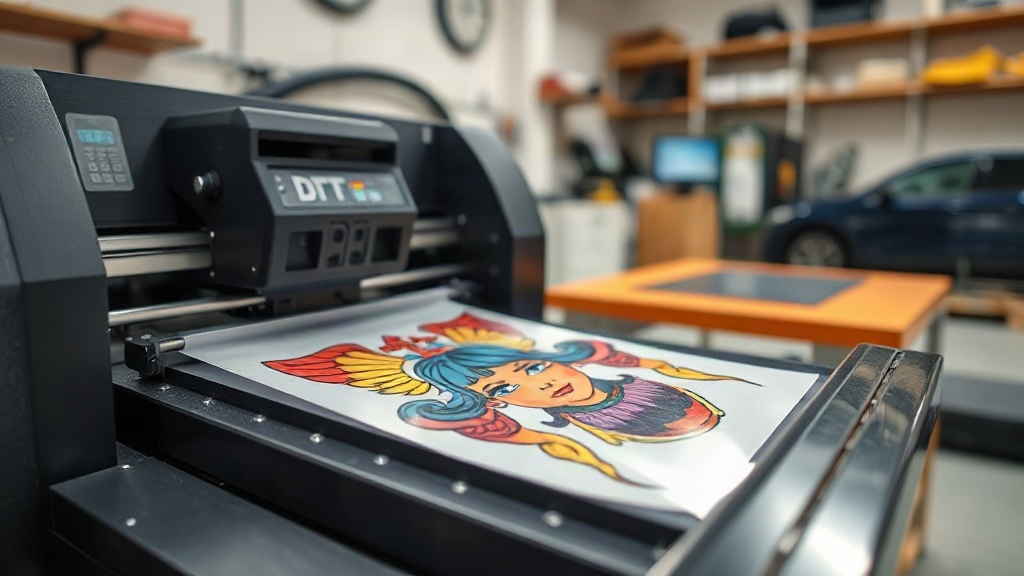
Imagine launching a custom apparel line without holding inventory, yet still delivering vibrant, durable prints that customers love. That's the promise of DTF printing on demand. Unlike traditional screen printing or heat transfer vinyl, DTF (Direct to Film) lets you print intricate designs onto a special film, then transfer them to fabric with a heat press. The result? Full-color, highly detailed prints on nearly any fabric, with no minimum order quantities. For print-on-demand sellers, this technology opens up a world of possibilities. In this guide, we'll cover everything you need to know about DTF printing on demand, from how it works to practical tips for getting started.
What is DTF Printing?
DTF stands for Direct to Film. It's a printing method where your design is printed onto a PET film using specialized DTF inks, then coated with a hot-melt adhesive powder. After the powder is cured, the film is pressed onto the fabric with a heat press, transferring the design. The adhesive bonds the ink to the fabric, creating a soft, stretchable, and durable print. Unlike DTG (Direct to Garment), which prints directly onto the shirt, DTF allows you to prepare transfers in advance and apply them on demand. This makes it ideal for print-on-demand businesses because you can produce transfers in bulk and store them until an order comes in.
Why Choose DTF for Print on Demand?
Print on demand is all about efficiency and flexibility. DTF excels in both. Here are the main reasons sellers are switching to DTF:
- No color limitations: DTF can reproduce gradients, photographs, and fine details with ease, unlike screen printing which requires separate screens for each color.
- Works on many fabrics: Cotton, polyester, blends, even leather and canvas. You're not limited to 100% cotton like with DTG.
- No minimums: Print one or one hundred. Perfect for on-demand orders.
- Durability: When applied correctly, DTF prints withstand repeated washing without fading or cracking.
- Soft feel: The prints are thin and flexible, so they don't feel like a plastic patch.
These advantages make DTF a top choice for entrepreneurs who want to offer a wide range of products without investing in expensive equipment or inventory.
How DTF Printing Works Step by Step
Understanding the process helps you troubleshoot and produce high-quality transfers. Here's a breakdown of the DTF workflow:
1. Design Preparation
Create your artwork in a graphic design program. Remember to mirror the image horizontally before printing, as the film will be flipped when pressed. Ensure your design has a transparent background if needed. Most DTF printers use CMYK plus white ink, so your design should be in CMYK color mode for accurate colors.
2. Printing
Load the DTF film into your printer. The printer lays down a layer of white ink first (if printing on dark fabrics), followed by the color inks. Some printers print white last, but the key is that the white ink provides opacity. The printed film is then dusted with hot-melt adhesive powder while still wet. Shake off excess powder and cure it under a heat source until the powder melts and becomes glossy.
3. Curing
Curing is critical. You can use a heat press or a dedicated curing oven. The powder must reach the right temperature (usually around 160°C/320°F) to melt and form a solid adhesive layer. Under-curing leads to poor washability; over-curing can cause the film to warp. Follow your powder manufacturer's recommendations.
4. Transferring
Set your heat press to the recommended temperature (typically 150-160°C/300-320°F) and pressure (medium to firm). Place the transfer on the garment with the design facing up. Press for 10-15 seconds. Let it cool completely before peeling the film. Cold peel gives the best results for DTF. After peeling, you can do a second press with a Teflon sheet for 5 seconds to enhance durability.
DTF vs. Other Printing Methods
How does DTF stack up against DTG, screen printing, and vinyl? Here's a quick comparison:
- DTG: Best for 100% cotton, no white ink on dark shirts without pretreatment. DTF works on more fabrics and doesn't require pretreatment.
- Screen Printing: Cheaper for large orders, but setup costs are high and color changes are costly. DTF has no setup fees and handles full color easily.
- Heat Transfer Vinyl: Good for simple designs, but layering multiple colors is time-consuming. DTF prints the entire design in one go.
For print-on-demand, DTF offers the best balance of quality, versatility, and cost-efficiency.
Getting Started with DTF Printing on Demand
Ready to dive in? Here's what you need:
- DTF Printer: Options range from converted Epson printers to dedicated industrial machines. Start with a reliable model that fits your budget.
- DTF Inks and Film: Use high-quality inks and film designed for DTF. Cheap supplies lead to clogs and poor transfers.
- Adhesive Powder: Choose a powder compatible with your ink and fabric types. There are soft-touch and standard options.
- Heat Press: A clamshell or swing-away press with accurate temperature and pressure control is essential.
- Curing Oven or Heat Gun: For curing the powder. A heat press can work for small batches, but an oven is more efficient for volume.
Once you have your equipment, practice on scrap fabric to dial in your settings. Every combination of printer, ink, film, and powder behaves slightly differently.
Tips for Success
- Maintain your printer: DTF inks can clog printheads if not used regularly. Print a small test daily and clean the printhead as needed.
- Store transfers properly: Keep them in a cool, dry place away from direct sunlight. They can last for months if stored correctly.
- Test washability: Before selling, wash a sample garment multiple times to ensure the print holds up.
- Offer a variety of products: DTF works on t-shirts, hoodies, tote bags, caps, and more. Expand your catalog without new equipment.
Frequently Asked Questions
What fabrics can I use with DTF printing?
DTF works on a wide range of fabrics, including cotton, polyester, blends, leather, and canvas. It's especially useful for dark and colored garments because the white ink layer provides opacity.
How long do DTF prints last?
When properly applied and cared for, DTF prints can last as long as the garment itself. Wash inside out in cold water and avoid ironing directly on the print.
Do I need a special printer for DTF?
Yes, you need a printer that uses DTF inks and can handle the film. Many people convert Epson printers, but dedicated DTF printers are also available.
Can I use DTF for small orders?
Absolutely. DTF is perfect for small orders and one-offs because there are no minimums and no setup costs.
Is DTF printing cost-effective for print on demand?
Yes, especially when you consider the lack of inventory and the ability to print on demand. The cost per print is reasonable, and you can scale easily.
With DTF printing on demand, you can offer high-quality custom apparel without the overhead of traditional printing methods. Whether you're a seasoned seller or just starting, DTF opens up new opportunities for creativity and profit.