
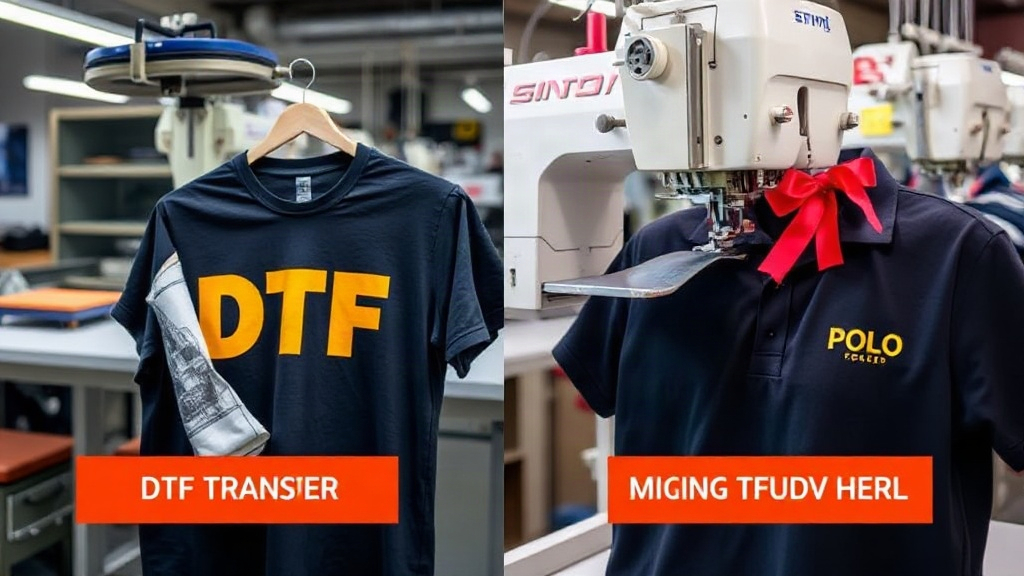
When you want to add a personal touch to apparel, two popular methods stand out: DTF transfers and embroidery. Both can turn a plain shirt into a branded piece, but they differ in look, feel, and longevity. Understanding these differences helps you pick the right technique for your project, whether you're a small business owner, a team manager, or a DIY enthusiast.
What Are DTF Transfers?
DTF stands for Direct to Film. It's a printing process where a design is printed onto a special film, coated with adhesive powder, and then heat-pressed onto fabric. This method has gained popularity because it works on almost any fabric, including cotton, polyester, and blends. DTF transfers allow for full-color, intricate designs with gradients and fine lines that other methods might struggle to reproduce.
How DTF Transfers Work
The process starts with a digital printer that lays down CMYK and white ink onto a PET film. The white ink acts as a base, making the colors pop on dark fabrics. After printing, a powdered hot-melt adhesive is applied, and the film is cured. When you're ready to apply, you place the film on the garment and use a heat press. The adhesive melts, bonding the ink to the fabric. Once cooled, you peel away the film, leaving a vibrant, flexible design.
Pros and Cons of DTF Transfers
- Pros: Full-color capability, works on various fabrics, no color limitations, soft feel, and relatively low setup cost for small batches.
- Cons: Can crack or fade over time if not cared for properly, not as durable as embroidery for heavy wear, and requires a heat press.
What Is Embroidery?
Embroidery is one of the oldest and most respected methods of garment decoration. It involves stitching thread into fabric to create a design. The result is a textured, three-dimensional look that screams quality. Embroidery is often used for logos, monograms, and text because it adds a premium feel. Unlike DTF transfers, embroidery doesn't rely on heat or adhesives; it's a mechanical process that physically interlaces thread with the fabric.
How Embroidery Works
Digitizing software converts your artwork into a stitch file. A computerized embroidery machine then reads this file and stitches the design onto the garment. The machine can use multiple thread colors, and the density and type of stitches affect the final appearance. Embroidery can be done on a wide range of fabrics, but it works best on stable materials like cotton, canvas, and polos.
Pros and Cons of Embroidery
- Pros: Exceptional durability, professional look, resistant to fading and cracking, and adds perceived value.
- Cons: Higher cost for complex designs, limited detail for small text or gradients, can be heavy on lightweight fabrics, and requires digitizing fees.
Key Differences: DTF Transfers vs. Embroidery
Choosing between DTF transfers and embroidery depends on your priorities. Here's a breakdown of critical factors.
Design Complexity and Color
DTF transfers excel with complex, multi-colored designs, including photographs and gradients. Embroidery, on the other hand, simplifies designs into thread colors and may not capture fine details. If your logo has many colors or subtle shading, DTF is likely the better choice. For bold, simple logos, embroidery shines.
Durability and Longevity
Embroidery outlasts DTF transfers in most cases. The thread is woven into the fabric, so it won't peel or crack. DTF prints can degrade after many washes, especially if washed improperly. However, with proper care, DTF can last for years. If you need maximum durability for workwear or uniforms, embroidery is the safer bet.
Cost Considerations
For small batches, DTF transfers are often more cost-effective because there's no digitizing fee and you can print one-off designs. Embroidery has a setup cost (digitizing) but becomes economical for larger orders. If you're ordering 50+ items with the same logo, embroidery might be cheaper per piece. For one-off custom pieces, DTF wins.
Fabric Compatibility
DTF transfers adhere to almost any fabric, including nylon, leather, and polyester. Embroidery requires fabrics that can support stitching without distortion; very stretchy or delicate fabrics may pucker. Always test on a swatch if you're unsure.
Making the Right Choice for Your Project
Consider the end use. For corporate uniforms that will be worn daily and washed frequently, embroidery offers a professional, durable solution. For fashion apparel with detailed graphics, DTF transfers provide vibrant, unrestricted creativity. Many businesses actually use both: embroidery for left-chest logos and DTF for large back prints. This hybrid approach leverages the strengths of each method.
Frequently Asked Questions
Can DTF transfers be applied to cotton shirts?
Yes, DTF transfers work great on cotton. The adhesive bonds well with natural fibers, and the print remains soft and stretchy. Just ensure you follow the correct temperature and pressure settings for best results.
Is embroidery more expensive than DTF transfers?
It depends on the order size and design. For small quantities, DTF transfers are usually cheaper because there's no digitizing fee. For large orders with a simple logo, embroidery can be more cost-effective per item.
How long do DTF transfers last?
With proper care, DTF transfers can last 50+ washes. Avoid ironing directly on the print, wash inside out in cold water, and tumble dry low. Following these steps will maximize longevity.
Can I put DTF transfers on a shirt that already has embroidery?
Yes, you can combine both. Just be mindful of placement; avoid pressing the DTF film directly over embroidery, as the uneven surface may prevent proper adhesion. Apply DTF to a flat area.
Which method is better for small text?
DTF transfers handle small text better because they can print fine details. Embroidery may struggle with letters under 0.25 inches, as the thread can blur together. For tiny text, DTF is the winner.