
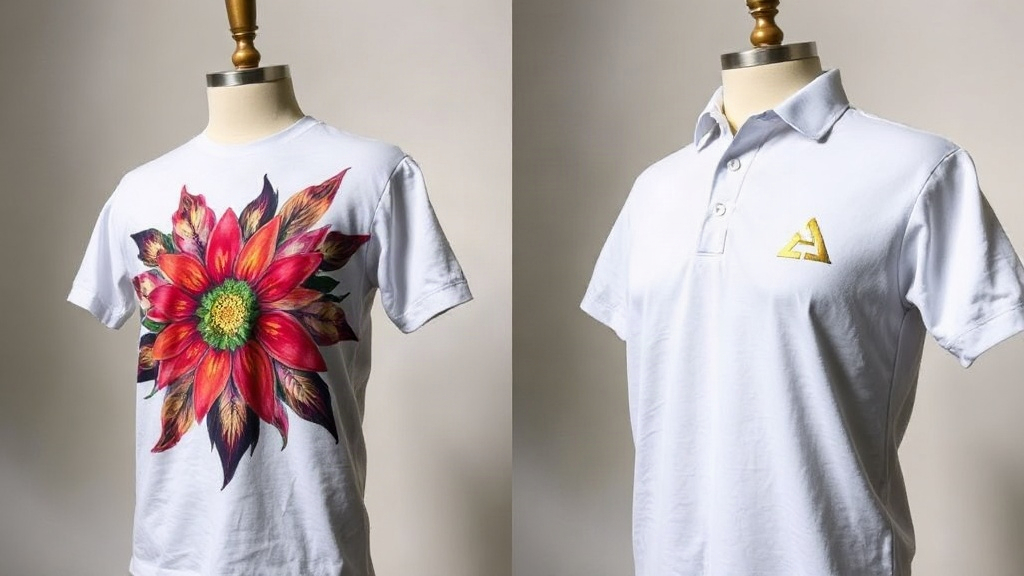
When you're planning custom apparel, whether for a team, business, or event, the decoration method you choose can make or break the final product. Two popular options are DTF transfers and embroidery. Both have loyal fans, but they serve different purposes. In this article, we'll compare them head-to-head so you can pick the best fit for your needs.
What Are DTF Transfers?
DTF stands for Direct to Film. It's a printing technology where your design is printed onto a special film, coated with adhesive powder, and then heat-pressed onto the fabric. The result is a vibrant, detailed print that can handle complex gradients, photographs, and fine lines. DTF transfers work on a wide range of materials, including cotton, polyester, and blends, and they don't require weeding or cutting, which makes them efficient for small and large runs alike.
What Is Embroidery?
Embroidery is the traditional art of stitching designs onto fabric using thread. It's a durable, textured decoration that adds a premium feel. Embroidery is often associated with logos, monograms, and classic designs. It requires digitizing the artwork, which means converting your design into a stitch file. Once digitized, the embroidery machine stitches the pattern onto the garment. Embroidery works best on stable fabrics like cotton, canvas, and fleece, but it can also be used on performance wear with the right backing.
Head-to-Head Comparison
Design Complexity and Detail
DTF transfers excel at reproducing intricate details, gradients, and full-color images. If your design has many colors or fine text, DTF is the clear winner. Embroidery, on the other hand, simplifies designs because each color requires a separate thread and the stitch count affects the cost. Very fine details may get lost, and gradients are difficult to achieve. For a photorealistic image, DTF is the way to go; for a bold, simple logo, embroidery shines.
Durability and Longevity
Embroidery is known for its longevity. The threads are stitched into the fabric, so they can withstand repeated washing and wear without fading or peeling. DTF transfers have improved significantly, but they can crack or fade over time, especially if not cared for properly. However, with proper washing (inside out, cold water, no harsh detergents), DTF prints can last for years. If you need maximum durability, embroidery has the edge.
Cost Considerations
For small orders, DTF transfers are often more affordable because there's no digitizing fee. You just need a printer and heat press. Embroidery usually involves a one-time digitizing fee, which can be significant for complex designs. For large orders, embroidery can become cost-effective as the digitizing fee is spread across many items, while DTF costs are primarily material and labor per piece. However, DTF has lower setup costs, making it ideal for one-offs or small batches.
Fabric Compatibility
DTF transfers adhere to a wide range of fabrics, including cotton, polyester, nylon, and blends. They are also suitable for dark and light colors, though a white underbase may be needed for dark garments. Embroidery works best on woven fabrics that can support the weight of the stitches. Stretchy fabrics like spandex can be challenging for embroidery unless stabilizers are used. For performance fabrics, DTF is often the better choice.
Feel and Appearance
DTF transfers have a smooth, slightly plastic feel when applied. They sit on top of the fabric, so there is a noticeable layer. Embroidery adds texture and a three-dimensional look. Some people prefer the classic, upscale appearance of embroidery, while others prefer the vibrant, modern look of DTF. The choice often comes down to personal preference and the brand image you want to convey.
When to Choose DTF Transfers
- Your design has many colors, gradients, or photographic elements.
- You need a quick turnaround for a small order.
- You're decorating performance wear or stretchy fabrics.
- You want to avoid digitizing fees.
- You're working with dark garments and need bright colors.
When to Choose Embroidery
- Your design is a simple logo or text with few colors.
- You want a premium, durable finish that lasts for years.
- You're decorating hats, polos, or jackets where embroidery is expected.
- You have a large order and want to amortize the digitizing cost.
- You prefer a textured, classic look.
Hybrid Approaches
You don't always have to choose one or the other. Some businesses combine both methods: for example, using embroidery for a logo on the left chest and DTF for a large graphic on the back. This can give you the best of both worlds. However, keep in mind that mixing methods may affect the overall feel and care instructions.
Practical Tips for Success
Whether you go with DTF transfers or embroidery, proper preparation is key. For DTF, ensure your heat press is calibrated and use a quality transfer film. For embroidery, invest in good digitizing and use appropriate stabilizers. Always test on a sample garment before running a full order. And remember, the quality of the blank garment matters too; a cheap shirt can undermine even the best decoration.
Frequently Asked Questions
Can DTF transfers be used on 100% polyester?
Yes, DTF transfers work well on polyester. However, because polyester is heat-sensitive, you should use lower temperatures (around 280°F to 300°F) and light pressure to avoid scorching or dye migration. Always test on a scrap piece first.
Is embroidery more expensive than DTF?
It depends on the order size and design complexity. For small orders, DTF is often cheaper because there's no digitizing fee. For large orders, embroidery can be cost-effective as the digitizing fee is spread out. However, embroidery generally has a higher per-piece cost due to thread and labor.
How long do DTF transfers last?
With proper care, DTF transfers can last 50+ washes. To maximize longevity, wash inside out in cold water, avoid bleach and fabric softeners, and tumble dry on low or hang dry. Avoid ironing directly on the print.
Can I embroider on a T-shirt?
Yes, you can embroider on T-shirts, but you'll need a stable fabric and appropriate backing. Lightweight T-shirts may require a cut-away stabilizer to prevent stretching. For best results, choose a heavier-weight tee.
Which method is better for hats?
Embroidery is the traditional choice for hats because it provides a durable, professional look. DTF on hats can work but may not adhere well to curved surfaces and can peel over time. For a classic cap, go with embroidery.
Ultimately, the decision between DTF transfers and embroidery depends on your specific project. Consider your design, budget, timeline, and desired outcome. Both methods have their place in the custom apparel world, and understanding their strengths will help you make an informed choice.